

The UK’s Open Data Institute has helped Burkina Faso to peaceful regime change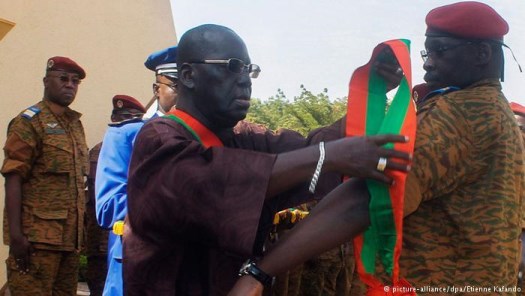
Burkina Faso has named its new government after a bloodless coup that toppled the government of President Blaise Compaore. He has fled to Morocco, ending his 27 year rule. Compaore was planning to change the country’s constitution to further extend his period of office when protestors took to the streets with the backing of army officers. The new president, Lieutenant Colonel Isaac Yacouba Zida, has promised to hold elections early in 2015.
Meanwhile in London, Burkina Faso’s partners in the Open Data Institute are citing the small West African nation as a success story, and the peaceful transition of power as an example of how transparency can empower people. At the ODI Summit, Minister for ICT Development Alfred Namwaya Sawadogo told delegates that his country’s experiment in opening the books of government departments and allowing free use of official data on websites and social media has paid off.

Alfred Namwaya Sawadogo at the ODI Summit 2014
Speaking through interpreter Elizabeth Zendel on the PassW0rd radio show on Resonance 104.4FM, Minister Sawadogo explained how the ODI had helped him to transform Burkina Faso’s schools by making it possible for pupils, parents and teachers to see the results, class sizes and resources of each school, and helped the government to plan for the future by siting new schools where they are most needed.
Schools
The campaign ‘Our Data, Our Schools’ is just one of several initiatives backed by the ODI, which was founded by Sir Tim Berners Lee and Sir Nigel Shadbolt, creators of the World Wide Web. The World Bank is funding the partnership. Alfred Sawadogo said the new era of official openness created by the Open Data Institute partnership made a difference. When it came to blocking the former president’s attempt to cling to power, social media and pictures taken by citizens ensured that the government and the army had to respect the demonstrators because everyone could see what was happening on their smartphones. Listen here to the full interview:-


