By Jason Burke and Peter Warren
The Government’s secret Celldar project will allow surveillance of anyone, at any time and anywhere there is a phone signal.
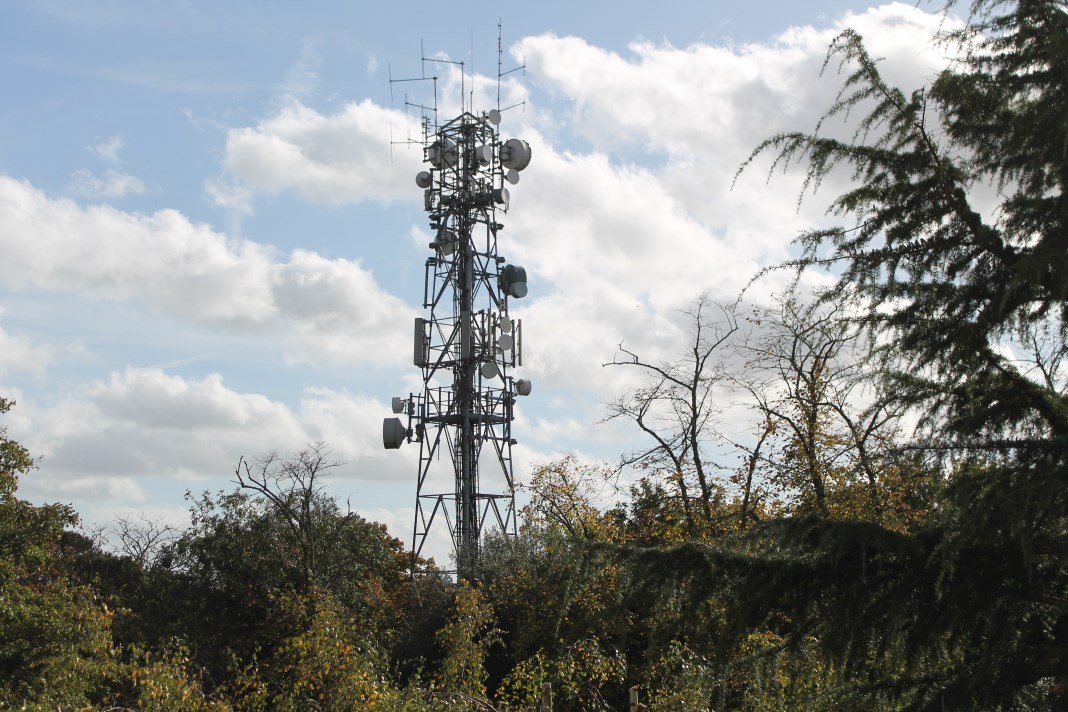
The radical new system, which has outraged civil liberties groups, uses mobile phone masts to allow security authorities to watch vehicles and individuals ‘in real time’ almost anywhere in Britain.
System can even unmask stealth fighter
To the anger of the US military, researchers discovered that it can even pick up supposedly ‘invisible’ stealth aircraft, the method used to detect a stealthfighter shot down over Serbia during the recent Serbian conflict.
The technology ‘sees’ the shapes made when radio waves emitted by mobile phone masts meet an obstruction. Signals that are then bounced back by immobile objects, such as walls or trees, are filtered out by the receiver.
This allows anything moving, such as cars or people, to be tracked. In the past, radar needed massive fixed equipment to work and transmissions from mobile phone masts were thought too weak to be useful.
The system works wherever a mobile phone can pick up a signal.

By using receivers attached to mobile phone masts, users of the new technology could focus in on areas hundreds of miles away and bring up on a display any moving vehicles and people.
An individual with a receiver, a portable unit little bigger than a laptop computer, could even use it as a ‘personal radar’ to cover the area around the user.
Civil liberties backlash
Researchers are also working to give the new equipment ‘X-ray vision’ – the capability to ‘see’ through walls and look into people’s homes.
According to Ministry of Defence officials the MoD is hoping to introduce the system as soon as resources allow, while the police and security services have also indicated that they are interested in a variety of possible surveillance applications for the system whose name comes from an amalgamation of the words cellphone and radar.
Scientists working on the system say it is aimed at anti-terrorism defence, security and road traffic management.
However civil liberties groups have been swift to condemn the plan.
‘It’s an appalling idea,’ said Simon Davies, director of Privacy International. ‘The Government is just capitalising on current public fears over security to intoduce new systems that are neither desirable nor necessary.’
The Celldar system, used alongside technology which allows individuals to be identified by their mobile phone handsets, will mean that specific individuals can also be located and their movements watched over long distances.
Prototypes have been effective over 50 to 100 metres but the developers are confident that that range can be extended.
After a series of meetings with Roke Manor, a private research company in Romsey, Hants, MoD officials have started funding the multi-million pound project.

Government interest
Reports of the meetings are ‘classified’. Though Whitehall officials involved in the radar research confirmed that the MoD was ‘very interested’ last week.
‘It’s all about resources now,’ said one.
The development has also been welcomed by private security firms specialising in surveillance.
‘It will be enormously useful,’ the director of one private security firm said. ‘Instead of setting up expensive and cumbersome surveillance equipment, police or the security services could start work quickly and easily almost anywhere.
‘For tracking a suspect, preventing a potential crime or a terrorist strike or simply locating people the system has enormous advantages.’
It is likely that the technology would be used at first to protect sensitive installations such as ports and airfields.
The perimeter of a nuclear power station or an RAF base could be watched without having a bank of CCTV screens and dozens of expensive cameras.
If the radar picked up movement then a single camera could be focused on a specific area.
Ability to see through walls
Celldar could also monitor roads when poor visibility due to bad weather rendered cameras useless.
‘The equipment could pick up traffic flows towards an accident site and the details of a crash; who is where and so on,’ said Peter Lloyd of Roke Manor.
Lloyd also outlined a number of military applications for the technology. Individual armoured vehicles or even soldiers could carry the detectors which could tell them where enemy troops were.
Security specialists point out how useful personal radars would be in siege situations. However there are significant concerns that the technology might be abused by authorities or fall into the wrong hands.
‘Like all instrusive surveillance, we need to be sure that it is properly regulated, preferably by the judiciary,’ said Roger Bingham of Liberty.
Bingham expressed concerns that the new equipment, which would be virtually undetectable, could be used by private detectives or others for personal or commercial gain.
Modern technology has brought massive opportunities for wider surveillance.
Since the 11 September terrorist attacks on Washington and New York, the government has been pushing through a package of anti-terrorism legislation which targets electronic communications.
Senior police officers are now allowed to access mobile telephone and email records without judicial or executive assent. Within two years, all mobile phones are expected to have satellite-locating devices built into them.
http://www.3nw.com/pda/radar_with_cell_phones__look_at_celldar.htm
http://www.businessweek.com/magazine/content/03_42/b3854113.htm
http://www.powerwatch.org.uk/News/20030111_celldar.asp
__________________________________________________________________________________________
Article published in Observer