One hundred years after World War 1 hi-tech apps are bringing to life the stories of the war dead
At the heart of the battlefield in the town of Ypres (Ieper) in Belgium, the museum called In Flanders Field offers visitors an interactive armband with Near Field Communication that lets them log in to the museum’s system. Their experience is then personalised depending on their country of origin, gender and age. So an elderly man arriving from Munich will be greeted in German by videos and holograms of actors playing real people who fought in the 1914-18 conflict. A schoolgirl from Manchester, on the other hand, might hear the voice and watch the performance of a young woman from her region speaking in English with a local accent about why she volunteered as a nurse in the field hospitals.
Both characters – and many others – appear in the same glass cases, together with letters, guns and other artefacts from the Western Front. Soldiers of all ranks, nurses, doctors and chaplains are portrayed in 3D and speaking in English, French, Flemish or German. Visitors can also watch full-length video re-enactments of battle scenes based on letters, diaries, maps and military orders preserved in the museum.
Poppies
The NFC armband in white plastic (pictured above) is decorated with a red poppy, the symbol of remembrance amongst the Allied and Commonwealth nations. It gives its name to the museum: ‘In Flanders field the poppies blow‘ is the first line of a poem by Canadian soldier John McCrae.
The IFF Museum is the brainchild of director Piet Chielens, a native of Ypres, who told FI’s Jane Whyatt ” This is World War 1 for the video games generation. It’s important to reach young people through technology so that they appreciate what happened.”
Red poppies are worn in the UK in the days leading up to Remembrance Day which marks the signing of the Armistice that ended the First World War in 1918 ‘at the eleventh hour of the eleventh day of the eleventh month.’ Anti-war campaigners wear white poppies in their buttonholes and lay wreaths at war memorials as a sign of protest against the blood shed in wars and support for the conscientious objectors who refused to be conscripted to fight and instead were forced to work in coal mines and hospitals.
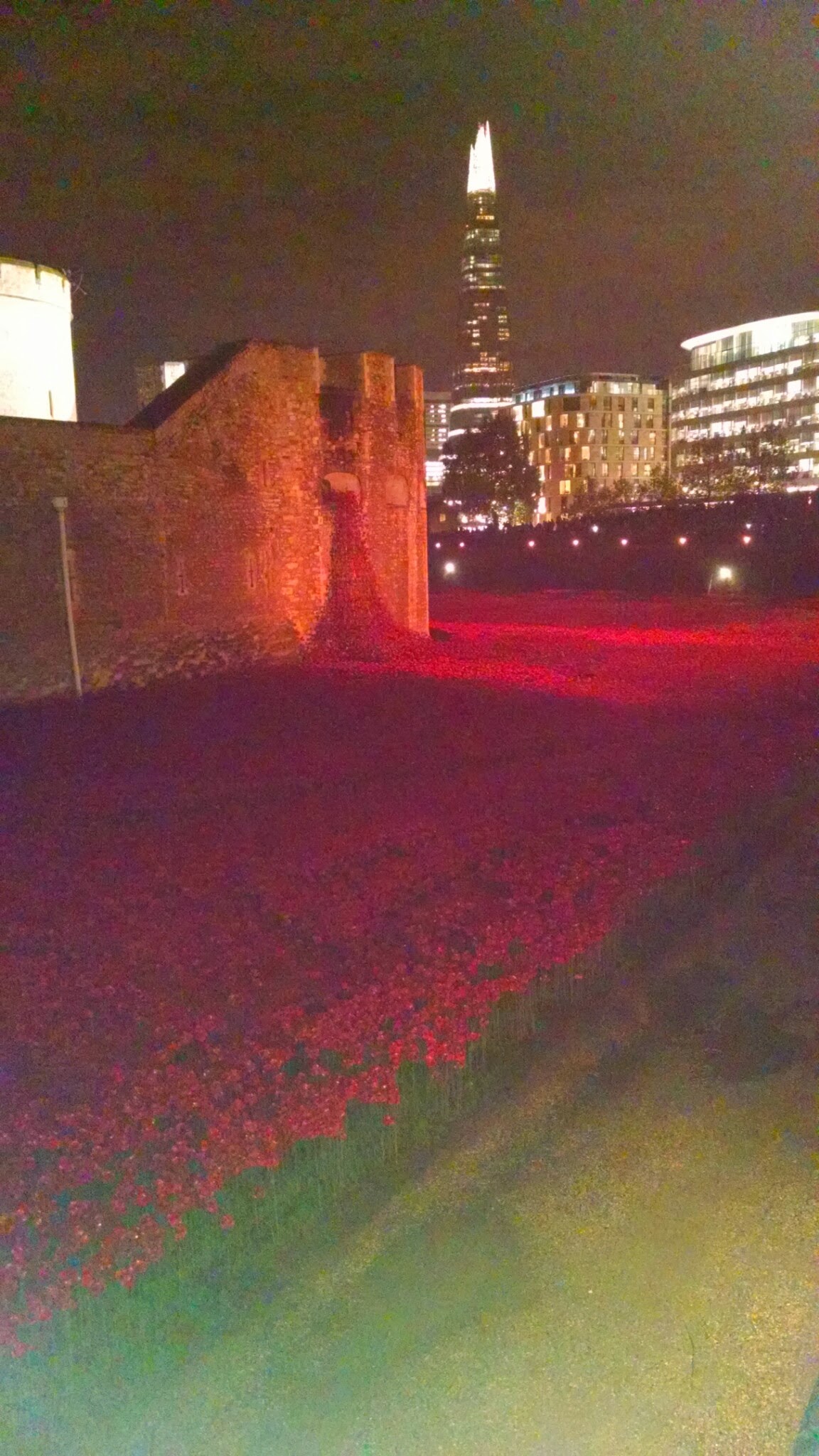
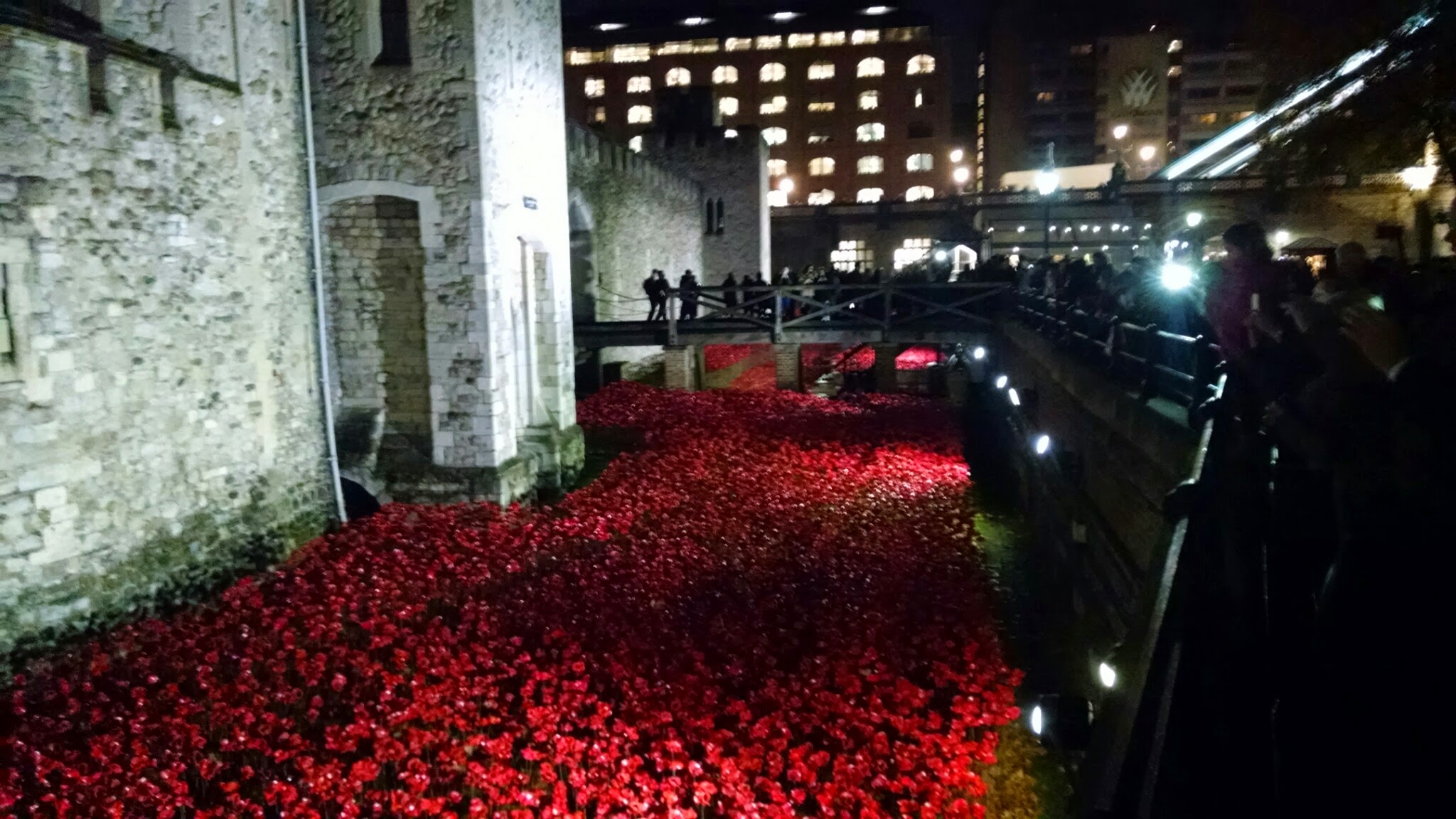
Britain’s major memorial is the field of 888,246 poppies crafted by ceramicist Paul Cummins using twentieth-century technology and displayed around the Tower of London – one flower for each man who died. The installation has attracted a record number of visitors – more than four million by Armistice Day partly thanks to the social media campagins, with #Towerpoppies and #Poppyselfie on Twitter and Instagram and a popular Facebook page. As well as taking ‘selfie’ pictures the crowds listen to a Beefeater (guard) reading aloud the names of those who died on that day 100 years ago, gun salutes and a bugler playing the Last Post. A drone equipped with cameras has produced aerial footage of the installation showing a Beefeater (guard) in traditional uniform striding amongst the pottery poppies and rarely-seen views of the Tower of London, a fortress where the Crown Jewels are kept.

FI Editor Peter Warren comments: “This should be a solemn tribute but it is turning into s selfie backdrop for tourists”
Crowdsourcing and a special app have enabled Brits who are descended from WW1 combatants to build a digital installation ‘Lives of the First World War‘ on the website of the Imperial War Museum. More than six million life stories have been added, as families searched their attics to unearth old photographs, diaries and letters to be immortalised online. Thousands have used the www.ancestry.co.uk app to trace their forebears.
Internet users have also joined battle with the Government, which plans to cut the Imperial War museum’s budget by £4 million – a saving that will force the closure of the IWM library if it goes ahead. An online petition started by the Prospect trade union (representing museum workers) has already gathered more than four thousand supporters who are sharing it on social media.
The Museum has created a Flickr album showing photographs of service personnel and podcasts are available to download from iTunes.
On smartphones and tablets the Great War is tracked in detailed timelines, with rich content and video provided by Touchzing Media in its World War 1 Interactive app.
http://www.youtube.com/watch?v=4wTkIEnLkNY#t=16
The gore, futility and misery of trench warfare can be distressing for young children so Abecedair has developed an app that will engage nine-to-eleven-year-olds whilst sparing them the full horrors of the war that was meant ‘to end all wars’ and left 26 million people dead.
https://itunes.apple.com/gb/app/world-war-one-for-kids/id805566970?mt=8
For those who can stomach it, an immersive experience complete with the stench of death and the sights and sounds of battle is available at the Imperial War Museum’s Trench exhibit. the ceramic poppies are offered for sale at £25 each in aid of veterans’ charities and the installation will be dismantled, with parts of it touring other sites in the United Kingdom.