One of Britain’s top scientists is calling for an international ‘community of the willing’ to prevent a potential war in space. She warns that a lack of cyber security puts us at risk.

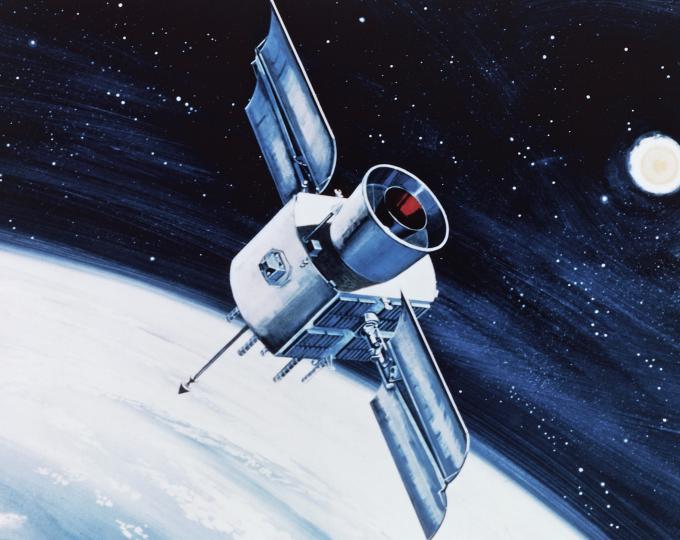
In an exclusive interview with Future Intelligence Editor Peter Warren, Dr Patricia Lewis, the Research Director at the Royal Institute of International Affairs, more commonly known as Chatham House, describes how satellites can be hacked, hijacked, jammed or “spoofed” or programmed and poisoned with wrong information.
“Some attacks we have known about have been on US weather satellites. You might say; ‘well what does it matter terribly if you’ve attacked a weather satellite?’ The US weather satellite system is part and parcel of the strategic system, and missile launches and aircraft all require those satellites to be functioning as best they can. If they’re not functioning we need to know that they’re not functioning,” said Dr Lewis.
Lewis is a respected nuclear physicist, who worked with Hans Blix Lewis as a commissioner on the Weapons of Mass Destruction Commission. Currently Dr Lewis is an advisor to the International Commission on Nuclear Non-proliferation and Disarmament.
Snuggling with intent
What is concerning the experts is that due to the sensitivity of their role in defence networks that state actors or terrorists are most likely to take advantage of the satellites vulnerability to information warfare techniques to target the critical international infrastructure of telecommunications and power supplies, said Dr Lewis.
You might say; ‘well what does it matter terribly if you’ve attacked a weather satellite?’ The US weather satellite system is part and parcel of the strategic system, and missile launches and aircraft all require those satellites
Dr Patricia Lewis
Another technique that has been observed are physical manoeuvres intended to either be knocked out of their orbit by other satellites, or have their security compromised by a practice known as “snuggling”. A practice that involves moving a satellite as close to another as possible. The aim is to either pick up the communications to it to try to decipher signals to it. While other satellites are moving past satellites on surveillance missions to examine equipment configurations to work out their purpose.
An Achilles Heel in the stars
All of these intrusions could have catastrophic consequences on Earth, where many of our everyday systems rely on accurate information from the hardware high above in orbit. For example, information about weather can affect air traffic control, agriculture, sporting and cultural events, commodities trading, maritime navigation and logistics. If the flow of data is interrupted, hacked or spoofed all these systems could go wrong. An interference that could also effect the synchronisation of Earth-based systems.
Older “legacy” satellites actually lack any kind of cyber security because they were launched before the birth of the internet, simply because no body expected people would be able to reach them. Dr Lewis says without international voluntary regulation involving commercial and state providers of satellites, the risk of hacking will become acute.

The warning from Chatham House’s Dr Lewis comes at a time of renewed interest in space. Scientists and technology companies are now actively developing new uses for orbiting systems. One idea being suggested is the development of power stations in space harvesting power directly from the Sun via solar panels and then beaming it down to the Earth using microwaves. Other potential uses have come from the London School of Economics’ Professor Ian Angell, who in his book ‘The New Barbarian Manifesto,’ suggested that they will be adapted for use as tax havens to store crypto-currencies and other funds out of the reach of tax authorities.
_________________________________________________________________________________________________________________
Peter Warren’s interview with Dr Patricia Lewis also appears in the PassW0rd radio show where technologists and defence experts comment on the unforeseen dangers posed to satellites. You can hear Dr Lewis’ full interview by clicking on the link below.