The world’s seas are facing a plastic crisis that is devastating wildlife and could potentially choke the planet within 30 years due to our dependence on the material for technology and packaging.
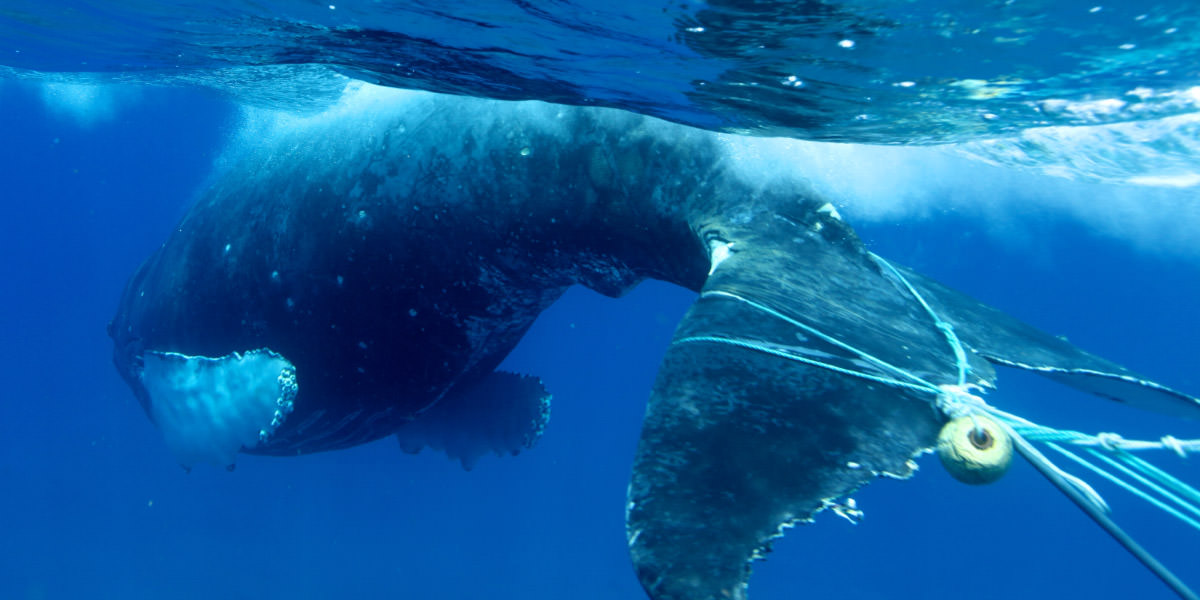
Research by Future Intelligence’s PassW0rd radio programme ‘The price of plastic’ has uncovered a shocking picture of official ineptitude and buck passing that is resulting in an environmental disaster and will eventually begin to poison the world’s human population.
The plastic crisis is fuelled in many ways by the technology industry which routinely uses it in its products because of the unique flexibility offered by the material to be fashioned into any shape required. A flexibility that has led to the widespread use of plastic whose effects have been made even worse by ‘single use’ products like bags and bottles. It is a pollution crisis caused by every part of our economy from car and technology companies to big culprits like the fishing and building industries.
Horrifying wildlife impact
“Research that we have done indicates that around 55% of sea turtles are already suffering from plastic poisoning,” Dr Kathy Townsend, a marine biologist from Queensland University and a researcher for the Galapagos Conservation Trust told the programme.
For the turtles it is a potential death sentence The plastic they have ingested either floating in the sea or from plastic bags they have mistaken for the jellyfish turtles consider a delicacy, either chokes their stomachs sending off triggers telling them that they are full, or ruptures their stomach lining causing blood poisoning or blocks the digestive tracts and prevents them from defecating.
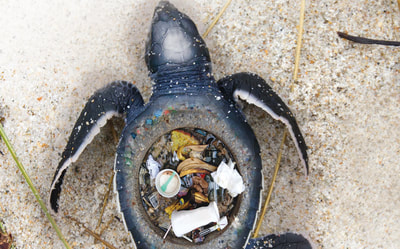
In the case of blocked intestines, the turtle’s fate is particularly grim. Gases build up in the creature’s bodies which mean they cannot dive to feed This means they float on the surface, making them vulnerable to predators and boat-strike. Perhaps a merciful end, as the other option is starving to death over a period of four months.
And turtles are only one of the marine animals choking in the particles and larger pieces of plastic in the sea. Larger marine mammals such as whales have also been killed by the plastic flooding into their ecosystem. Manta rays, according to Dr Townsend have been found with their mouth horns amputated. The mouth horns are essential for the mantas to funnel food into their stomachs. Tellingly, Townsend adds that they see manta rays with one mouth horn amputated but that they have never seen one with both horns missing, implying that without both horns the creature dies.

Whales and dolphins are also becoming snared in discarded nets and plastic waste and there is evidence that they are also dying from plastic ingestion. Sadly, they are not alone, most other sea organisms are falling foul of plastic and the list is growing, eventually scientists say it will include us.
World threat
By 2050, according to Dr Townsend, the plastic crisis is such that soon there will be more weight of plastic in the sea than fish. If that is the case, things do not look good for humanity. At present some 50% of the world’s population some 3.5 bn people rely on the sea for their food, and according to research, we already have plastic in our stomachs in small amounts due to the presence of micro-plastics in the environment, a figure that can only grow.
A fact underlined by research from US scientists from the universities of California and Georgia who two years ago estimated that there were 8.5 billion tonnes of plastic in the environment. Their research indicated that much was now in landfill and that significant amounts were now making it into the sea.
According to sightings, plastic bags have even been discovered in the deepest part of the ocean, seven miles down in the Mariana Trench. This ability for plastic to reach even the furthest parts of the earth is one of the reasons for the development of the ’Mayflower’ by IBM and Brett Phaneuf of MS Subs, a robot ship that will be able to go to places that a manned vessel cannot, according to those developing the project, one of its missions will be to sample water to discover the extent of micro-plastic pollution around the world.
It is hoped Mayflower will be able to validate new figures that estimate that by 2050 the amount of plastic polluting the world will have climbed to 12 billion tonnes because of the recycling policies followed by Western governments, irresponsible industry practices and consumer attitudes.
The recycling myth
Jon Godfrey a recycling expert who has launched three successful businesses which reclaimed precious materials from electronic waste, says that only between 22% and 32% of the world’s plastics have been recycled, a statement backed by scientific research and many of those who took part in the PassW0rd programme, and as Godfrey points out, the black plastic so beloved of phone manufacturers and the makers of many other tech products is virtually unrecyclable.

Rather than being recycled Godfrey sets out the journey taken by most of the plastic and electronic waste that the UK’s population puts either in their recycling bins or delivers to council tips. It is plastic that is not ending up as new material to make new products but being cherry picked for valuable bits of tech, plastic and electronics. The bulk, Godfrey tells us, is usually burnt or flushed into rivers from where it makes it way to the sea, from places like Smoky Mountain in the Philippines and Agbogbloshie in Ghana and fomenting the plastic crisis.
Hard choice of plastic crisis – burn or learn
Agbogbloshie is listed along with Chernobyl, as one of the top ten most polluted places in the world in a study by the Scientific American Magazine.
One partial solution is to burn it, according to Bruce Davis, of the venture capitalists Abundance, which is converting an old coal-fired power station at Uskmouth in South Wales to burn plastic pellets. The result is mainly water though Davis concedes that burning plastic does generate some pollution, but claims it is less polluting than allowing it to seep into the sea.
“We have a coal plant that’s got over 20 years of life in its turbines and the assets that were created to generate energy from coal, and you can make energy from something which currently is not being recycled, so this is not plastic that could be recycled. This is plastic which is unrecyclable, such as car dashboards. You can’t recycle those at the moment. They’re just being piled up and waiting for a solution. And one of those solutions is to burn them,” said Davis, adding that by far the largest culprit in generating the plastic slowly choking the earth is the building industry which dumps huge amounts of plastic into skips which then dump their contents into landfill.
Unfortunately, as Davis points out landfill is no longer an option. In the UK the capacity of landfill is running out.
A problem made by our economic model
Though there is some hope, as Chris Blomeley of Colchester’s Repair Café, which teaches people to mend their old technology points out, the EU has now mandated that from 2021 manufacturers of common household products such as fridges, dishwashers and displays will have to provide spare parts and advice on how to repair them for 10 years after they were made.
An attempt to try to detach us from the shiny wipe clean high-tech world promoted by the marketing industry on behalf of the technology sector for as many of those interviewed for the programme pointed out it is our love for gadgets and the futuristic world pushed at us from those soon to be repairable TV screens that creates so much of the problem and is generating the plastic crisis.
Not only does the technology industry love using the malleable plastic it sells to us, it wants to keep selling us new products so we will throw away the old ones, with Christmas being a prime time for replacement.
It is a practice that in itself damages the environment in other ways, because as the campaigning right to repair website ‘iFixit’ noted in a report published in September, over half of an appliance’s carbon footprint is generated during the manufacturing process. The EU estimates that allowing devices to be repaired and used for longer could save as much as 167 TWh of energy per year by 2030. An amount roughly equivalent to the annual energy consumption of Denmark.